02-04-2026
Insights from Lucid Engineers on Balancing In-Person and Virtual
Hybrid workplaces are now a core part of how modern organisations operate. As teams split time between office and remote settings, audiovisual technology plays a central role in ensuring people can communicate, collaborate and contribute effectively wherever they are. At Lucid, we are an AV integration company with deep expertise in helping businesses bridge the gap between physical and virtual workspaces. In our experience, there are five key challenges that organisations encounter when they integrate AV for hybrid work environments. Overcoming these requires planning, expertise and a user-centric approach.
1. Compatibility and Interoperability
One of the first hurdles organisations face is ensuring that all their AV components and conferencing tools work together seamlessly. Many workplaces use a mix of devices, platforms and legacy equipment and making sure these systems communicate effectively is a common stumbling block. Without careful planning and standardisation, users can end up with confused setups where content sharing, audio routing or video conferencing fail to behave consistently. As AV system integrators, we focus on designing unified solutions that minimise fragmentation and create a smooth experience for users across devices and platforms.
2. User Experience and Ease of Use
Even the most sophisticated AV technology is only effective if people can use it with confidence. Hybrid workplaces involve users with varying technical ability and complexity can quickly lead to frustration. Intuitive AV control interfaces, such as touch panels and simple one-touch join features, reduce training burden and help everyone start meetings efficiently without technical support. Our approach as an AV integration company is to build systems that feel natural to use, giving employees the tools they need without unnecessary complexity.
3. Equity Between Remote and In-Room Participants
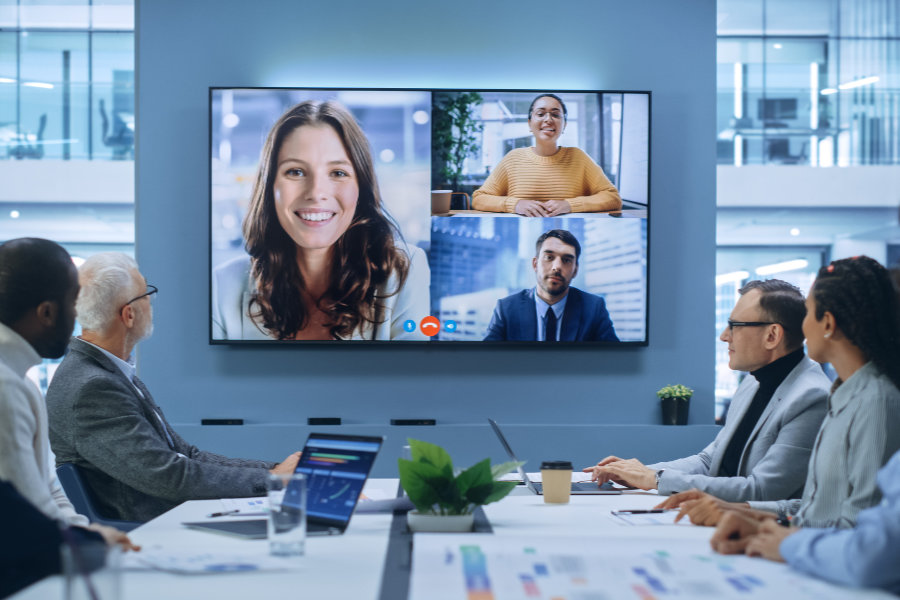
A persistent challenge in hybrid setups is meeting equity. Remote participants should not feel like second-class attendees where audio is muffled or camera angles exclude them. Ensuring that everyone has equal access to audio, video and shared content enhances engagement and avoids communication breakdowns. This requires careful camera placement, high-quality microphones and consistent audio systems so that remote users feel as present as those in the room.
4. Security and Network Integration
As AV systems increasingly connect to corporate networks and cloud services, safeguarding sensitive communications is essential. Network access controls, firewalls and encryption help protect meetings and prevent unauthorised access to systems. At Lucid, we work with IT teams to design secure AV integration that respects organisational policies and regulatory requirements, ensuring that hybrid technology enhances collaboration without compromising data protection.
5. Scalability and Future-Proofing
Hybrid workplaces continue to evolve, and the AV infrastructure must adapt. Whether you are equipping a single conference room or supporting multiple sites, scalability is critical. A strategy that allows new rooms, tools and features to be integrated without wholesale redesign ensures that your investment remains effective as needs grow. Partnering with an experienced AV system integrator like Lucid means your systems are built with flexibility and long-term performance in mind.
Why Choose Lucid?
At Lucid, we understand that integrating AV for hybrid workplaces is about more than just technology. It is about creating experiences that empower people to work together, feel connected and share ideas without obstacles. Through thoughtful design, unified control systems and close collaboration with our clients, we help organisations build AV environments that support hybrid work.
Contact Us
If you are planning to integrate AV into your hybrid workplace, or if your current systems are not delivering the experience you expect, we would be pleased to talk through your requirements. Please get in touch with our experienced team today.
We support consultation, design, implementation and ongoing management of AV integration projects that deliver reliable performance, intuitive control and seamless collaboration across physical and virtual environments.