04-03-2026
One Building, Many Rooms, One AV System That Actually Works
Designing AV systems across multiple rooms sounds straightforward in theory. In practice, it is one of the most common areas where audiovisual projects run into difficulties. Audio bleeding between spaces, displays showing the wrong source, controls behaving unpredictably or systems falling out of sync can quickly undermine confidence in even the most advanced technology.
At Lucid, we understand how these challenges develop and work proactively with our clients to ensure they are avoided from the outset. We design audiovisual systems that function as a coherent whole, even when individual rooms need to operate independently. A well-designed audiovisual solution should feel intuitive to users, regardless of how complex the infrastructure is behind the scenes.
The Challenge of Multi-Room AV Systems
Modern environments rarely rely on a single meeting room. Offices, universities, control centres and public venues often require multiple spaces to share sources, networks and control platforms, without impacting one another.
Without a clear system architecture, AV systems can end up competing rather than cooperating. Common issues include:
- Audio spill between adjacent or divisible rooms.
- Video appearing on the wrong display.
- Latency differences between spaces.
- Control interfaces that allow unintended cross-room interaction.
Lucid addresses these issues by designing AV systems at a system level, rather than treating each room as an isolated installation.
Synchronisation Across Multiple Spaces
Synchronisation is critical when spaces need to work together, such as overflow rooms, partitionable areas or multi-display environments. Even minor delays can become distracting and disruptive.
Lucid designs synchronisation into the audiovisual solution from the outset by:
- Accounting for processing latency across all devices.
- Ensuring consistent scaling, resolution and signal timing.
- Designing systems capable of frame-accurate alignment where required.
This approach avoids the need for workarounds later and ensures AV systems remain stable as they evolve.
Intelligent Routing that Prevents Conflict
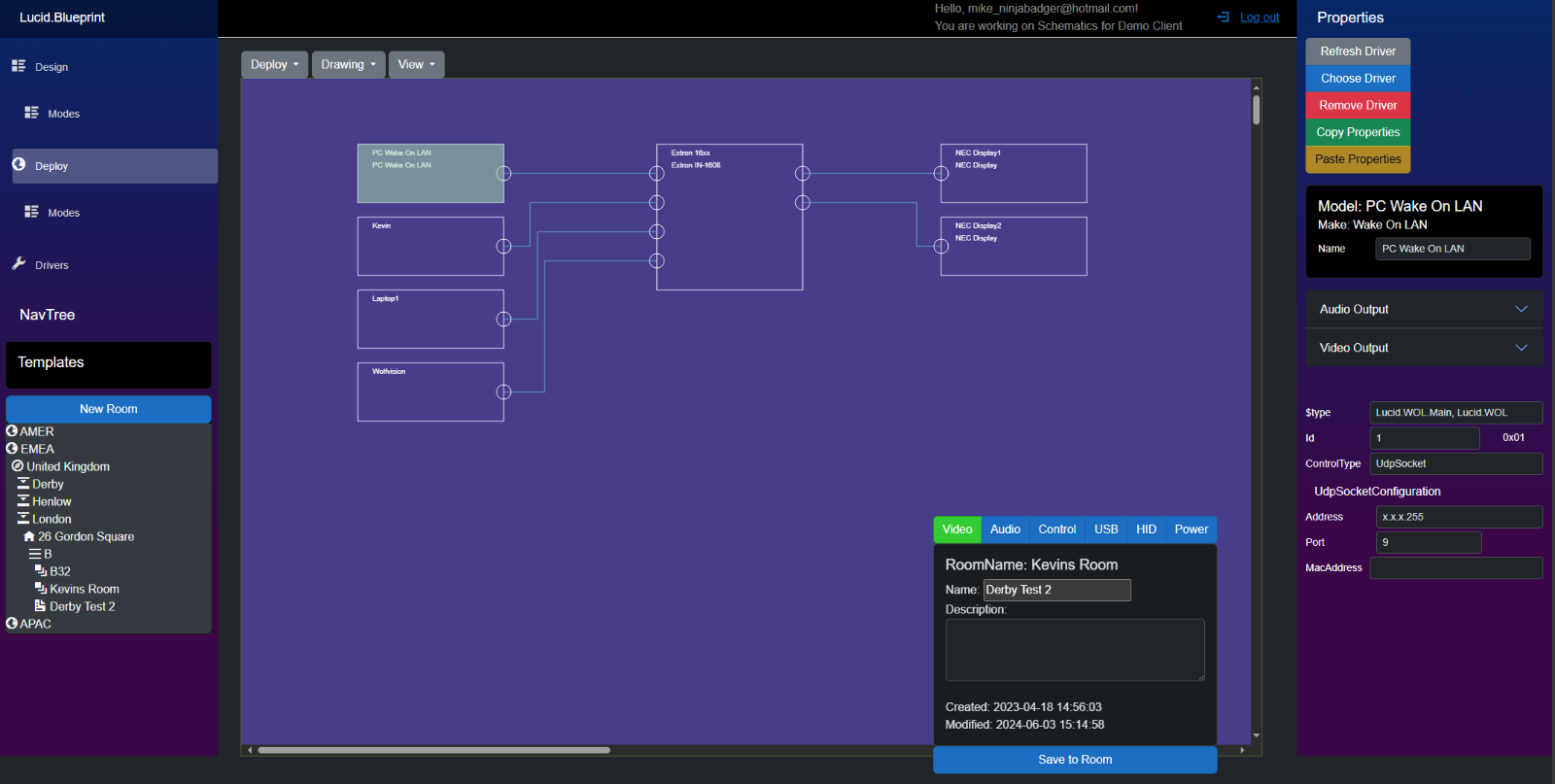
Routing is the backbone of any multi-room AV environment. A robust routing strategy ensures the right content reaches the right space, without accidental overlap or interference.
Lucid supports this by:
- Designing clear, logical signal paths across the entire system.
- Implementing networked routing that allows rooms to function independently or collaboratively.
- Planning for future expansion so new rooms or sources can be added without disruption.
The result is an audiovisual system that behaves predictably, even as usage patterns change.
Control Systems that Put Users First
Control is often where multi-room AV systems succeed or fail from a user perspective. Poorly designed control interfaces can make even simple tasks feel risky or confusing.
Lucid focuses on control strategies that:
- Reflect how each room is actually used.
- Provide clear visual feedback so users understand what is active.
- Include safeguards that prevent accidental control of other spaces.
By simplifying the user experience, Lucid ensures that the complexity of the AV systems remains invisible.
A Long-Term Approach to Audiovisual Solutions
Multi-room AV systems are rarely static. Organisations grow, layouts change and technology advances. Lucid designs audiovisual solutions that can adapt over time, without introducing new conflicts or inefficiencies.
By taking a structured, forward-looking approach to synchronisation, routing and control, Lucid helps clients deliver AV systems that work reliably today and remain flexible for tomorrow.
Contact Us
If you are planning a multi-room AV system or dealing with challenges around synchronisation, routing or control, Lucid can help. Please get in touch to discuss your requirements.
We support the design, implementation and long-term performance of AV systems across complex environments, ensuring your audiovisual systems work reliably, scale effectively and integrate smoothly within your wider technology estate.