
CRESTRON CRESNET

Crestron Cresnet Explained as a Core Part of Reliable AV Control
When designing and delivering high-quality control systems, understanding the wiring and communication protocols that connect AV devices is essential. Crestron Cresnet is one such protocol and remains a fundamental part of many audiovisual systems. At Lucid, as an accredited Crestron Services Provider, we specify, design and integrate Cresnet into larger control architectures to deliver dependable and scalable installations.
Cresnet is a communications link developed by Crestron to connect control devices such as keypads, sensors, lighting modules, thermostats, shade motors and touch panels into a cohesive control network. It is based on a proven communication standard, adapted specifically for reliable AV control in commercial environments.
Transform Your AV with Crestron Cresnet
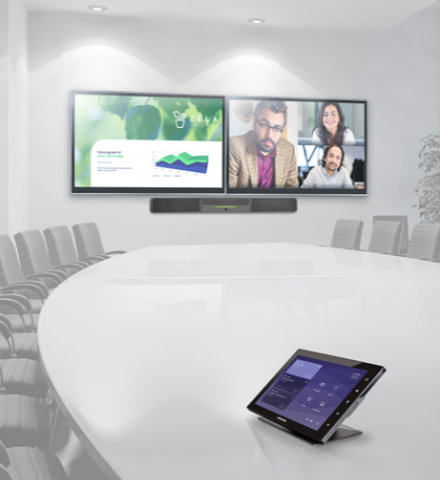
The Crestron Cresnet Network
The Cresnet network carries both control data and 24 V DC power over a single four-core cable. The standard connection includes four conductors: 24V, Y, Z and Ground. In some cases, the cable can even be used purely to distribute power where required.
Each connected device is given its own unique address, allowing the system to identify and communicate with up to 255 devices in an organised and controlled way. This ensures stable and predictable performance across the network.
When installed using the correct cable type, Cresnet can support cable runs of up to 5,000 feet, making it suitable for larger buildings and multi-room installations. It is widely used where simple, robust wiring and dependable communication are required, without the need for full network bandwidth.

What is a Crestron Cresnet Hub?
A Crestron Cresnet hub is used to extend and organise a Cresnet network. While a single Cresnet run can support multiple devices across a significant distance, larger projects often require the network to be divided into separate sections.
A Cresnet hub allows the system to be split into manageable segments, each supporting its own group of devices. This helps maintain reliable performance, particularly in buildings where devices are spread across multiple rooms or floors.
Segmenting the network also makes ongoing maintenance easier. If testing or servicing is required, individual sections can be isolated without affecting the entire system. For complex commercial environments, this structured approach improves both reliability and long-term serviceability.

Bridging Cresnet to Modern Networks
As audiovisual systems become more integrated with wider IT networks, it is often beneficial to bridge traditional Cresnet networks into Ethernet infrastructure. Crestron Cresnet to Ethernet integration is achieved using dedicated bridges or control processors that have both Cresnet and Ethernet interfaces. This allows Cresnet-based devices to be visible and manageable over a facility’s network, extending control reach and simplifying remote monitoring or centralised management.
This type of integration is particularly useful in larger estates where multiple meeting rooms, lecture spaces or collaborative areas need to be monitored, updated or supported from a central point. By combining Cresnet’s reliability for device-level control with Ethernet’s flexibility for networked monitoring and management, AV and IT teams can achieve the best of both approaches.
Why Cresnet Still Has a Place in AV Design
Even with the increasing adoption of AV over IP and modern control protocols, Cresnet remains relevant due to its simplicity, power-carrying capability and consistent reliability for device control. For many control networks in boardrooms, lecture halls and multi-zone facilities, Cresnet remains a dependable specification choice.
Contact Us
As a Crestron Services Provider, Lucid has deep experience in designing Cresnet networks, integrating them into broader control systems and ensuring they work seamlessly with other AV infrastructure. If you are planning an installation that includes Crestron control devices, or want to understand how Cresnet can fit into your AV design, our team can help, please contact us today.