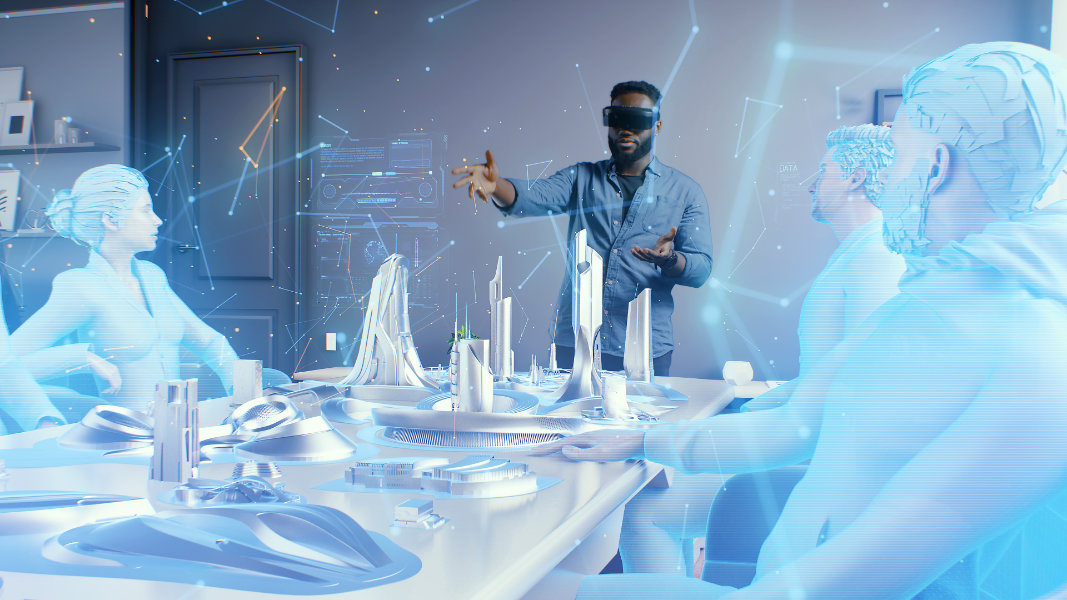
The world of display technology is constantly advancing, and one of the most exciting developments on the horizon is holographic display technology. As organisations invest in more engaging and immersive ways to share information, presentations and experiences, holographic displays are emerging as a powerful new option. At Lucid, we believe that the smart integration of this technology within wider audiovisual installations and control design will play a key role in future-ready environments.
Holographic displays produce three-dimensional images that seem to float in space without the need for headsets or specialised glasses. Unlike traditional displays or projection systems, holographic solutions can create visual depth that engages viewers in a more intuitive way. From educational settings and experiential spaces to museums and live events, this level of visual engagement has the potential to transform how people interact with content.
Why Holographic Displays Matter for Audiovisual Systems
Holographic displays will not replace traditional screens overnight, but they are a significant step forward in how we present visual information. For AV designers and integrators the challenge is not just in selecting the technology but in weaving it into a coherent audiovisual solution that makes sense for the space and the user experience. Early adopters are already exploring uses such as:
High impact executive presentations where a 3D model can be viewed from every angle.
Training environments where complex data or equipment can be shown spatially.
Exhibitions and showrooms where visitor engagement is a priority.
Live events and product launches where holographic content can create immersive, memorable audience experiences.
These applications demonstrate that holographic displays are not simply a novelty. They have real potential to improve communication, understanding and immersion.
Integrating Holographic Technology Within AV Installations
Successful deployment of holographic displays depends on good design, thoughtful integration and understanding of the surrounding environment. A holographic display needs to sit within a well-coordinated audiovisual installation that includes lighting control, sound reinforcement, room control and content management.
At Lucid we start by understanding how the space will be used and what outcome is being sought. Questions we consider include:
Will the display be used for collaborative meetings, large presentations or museum displays?
How will the audience be positioned and how close will they be to the display?
What other systems need to work alongside the display, such as lighting, audio or video?
By answering these, we can design a system that utilises holographic display technology effectively without overwhelming the space or the user.
The Path to Future-Ready Audiovisual Solutions
Holographic displays represent the next frontier in visual technology, but they should be part of an overall strategy that includes reliable control, flexible audiovisual systems and intelligent automation. For many organisations, the future of visual communication will be a hybrid of traditional screens and emerging technologies, like holography, delivered as part of a cohesive solution.
As the technology matures, costs reduce and integration techniques improve, we expect to see holographic displays become a more common feature in high-end presentation spaces and experiential environments.
If you are interested in exploring how holographic displays could enhance your environment or form part of a custom audiovisual solution, please get in touch with the Lucid team.