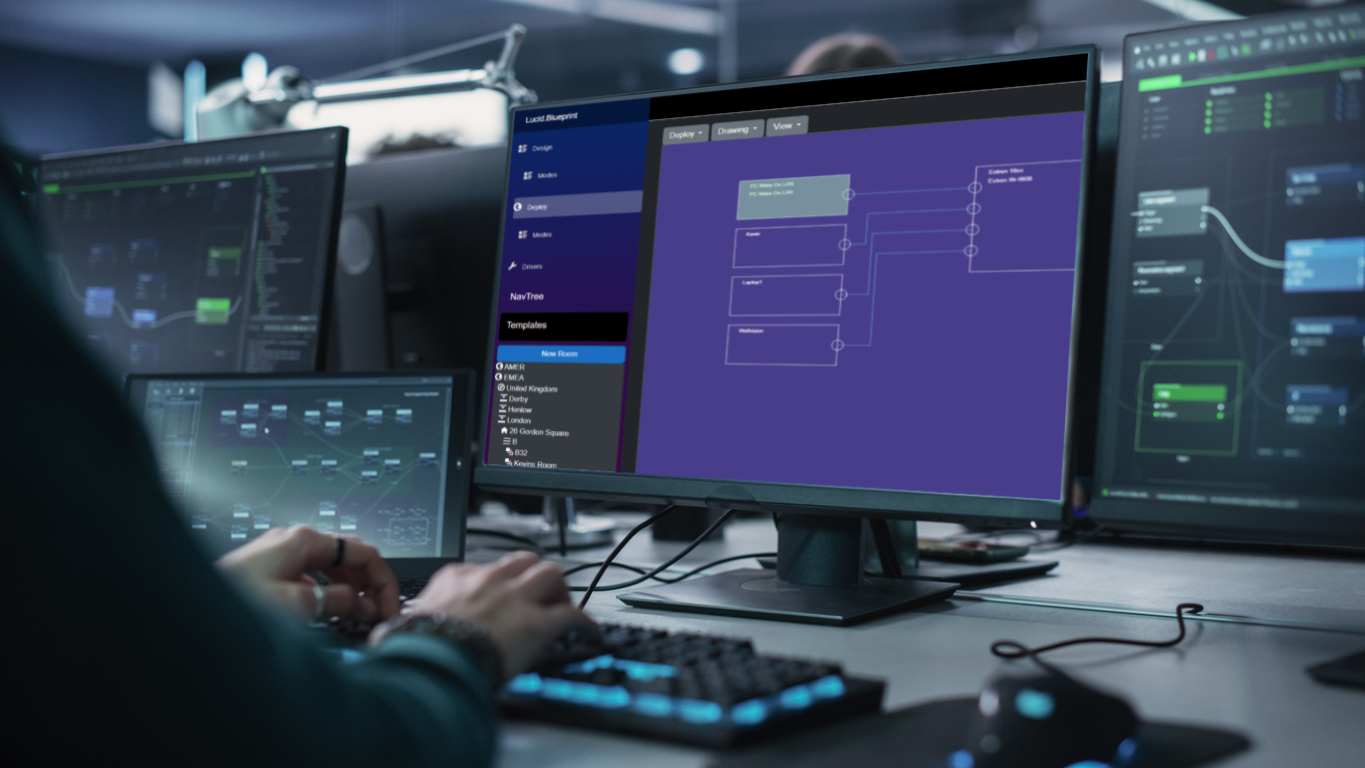
Why AV Software Design Matters for AV Facilities
Without effective software design, even the most advanced AV hardware can fall short. Poorly integrated systems often lead to user frustration, wasted time and underused meeting spaces.
For organisations managing multiple AV facilities, consistency is critical. Lucid’s AV software design ensures that every audiovisual room delivers the same high-quality experience, regardless of location. This is particularly important for hybrid working, where seamless collaboration between in-room and remote participants is essential. Lucid works closely with both IT and facilities teams to ensure that AV systems are aligned with operational needs. By understanding how spaces are used, we design software that supports real workflows rather than creating additional complexity.
Supporting IT and Facilities Teams
AV software design bridges the gap between technical infrastructure and day-to-day usability. IT teams benefit from systems that are secure, scalable and easy to maintain, whilst facilities teams gain greater visibility and control over their AV environments.
This collaborative approach ensures that every AV facility operates efficiently, from a single boardroom to a global estate of meeting spaces. By streamlining control and improving reliability, organisations can reduce support demands and improve overall user satisfaction.
Driving Better Outcomes from Every Audiovisual Room
An effective AV software design strategy delivers more than just convenience. It enables better communication, more productive meetings and improved use of space.
Lucid helps organisations get more from their AV facilities by designing software that is intuitive, flexible and built for long-term performance. By simplifying how users interact with technology, we reduce friction and ensure that every audiovisual room supports your business objectives.
Contact Us
If you are looking to improve the performance and usability of your AV facilities, Lucid can help. Contact our team today to discuss how our AV software design services can streamline your systems, simplify control and maximise ROI across every audiovisual room.