12-06-2026
Inside Lucid’s AV Design Process: From Brief to Deployment
Good AV design is rarely about the screens, speakers or control panels alone. The real success of an AV system often comes down to how well everything works together behind the scenes. That is where thoughtful planning, intelligent programming and real-world usability matter.
At Lucid, AV design is approached as a complete process rather than a single installation phase. From the first client briefing through to deployment and long-term management, the focus is always on creating systems that are intuitive, scalable and genuinely useful for the people using them every day.
Understanding the Brief
Every project starts with understanding how a space needs to function, not simply what technology should be installed.
Lucid works closely with stakeholders including IT teams, facilities managers, end users and operational teams to understand workflows, pain points and long-term goals. This stage shapes the entire AV system design process and ensures the technology supports the organisation rather than creating additional complexity.
For some organisations, the priority may be standardised meeting room experiences across global offices. For others, it may involve complex audiovisual design and installation within lecture theatres, financial enterprises, global offices, pharmaceutical facilities or control rooms. The process changes depending on the environment, but the principle remains the same, that the AV design must reflect real operational needs.
Designing Systems Around Real Users
One of the biggest mistakes in commercial audiovisual design is creating systems that only make sense to technical specialists.
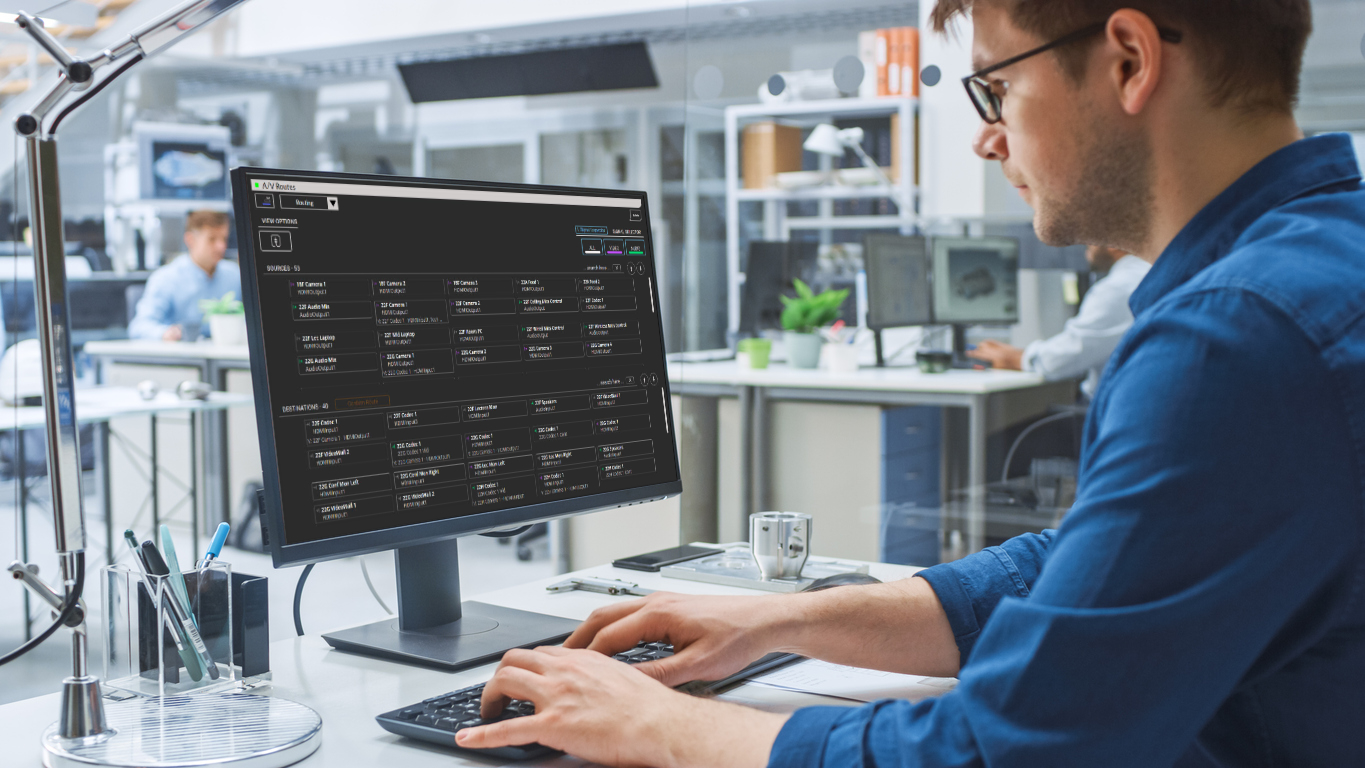
Lucid’s AV designers focus heavily on usability. The aim is to simplify how people interact with technology through clean interfaces, intelligent automation and consistent room experiences. Whether someone walks into a boardroom in London or a conference room in Singapore, the experience should feel familiar and easy to use. This involves much more than selecting hardware. AV system design includes:
- User interface development
- Control logic and automation
- Signal routing and interoperability
- Audio DSP programming
- Room booking integrations
- Remote monitoring and asset management
Lucid develops bespoke control systems using platforms such as Crestron, Q-Sys and its own Blueprint platform to create environments that feel seamless to the end user.
Building Scalable AV Infrastructure
Modern AV environments are increasingly network-led. Systems often need to operate across multiple buildings, regions or room types whilst maintaining consistency and governance.
That is why scalability is built into Lucid’s audiovisual design and installation process from the outset. Through Blueprint, Lucid’s cloud-based AV configuration management platform, organisations can standardise deployments whilst still allowing room-specific flexibility.
Rather than programming every room individually, Blueprint allows AV teams to configure and replicate systems using a visual design approach. This dramatically reduces deployment time and helps organisations maintain consistency across large estates.
The result is a more manageable AV ecosystem with simplified updates, reduced support overhead and faster rollout times.
Testing Before Deployment
Reliable AV systems are not created by installing hardware and hoping for the best onsite.
Lucid carries out extensive offsite testing and pre-configuration before deployment begins. Control logic, DSP chains and automation workflows are tested in advance to reduce risk, minimise disruption and speed up commissioning.
This stage is particularly important in enterprise environments where downtime or inconsistent user experiences can create significant operational issues.
By testing systems before they reach site, Lucid’s AV designers can identify problems early, refine workflows and ensure systems perform exactly as intended once deployed.
Deployment, Training and Long-Term Support
Deployment is not the end of the process. A successful AV system should remain manageable, adaptable and easy to support long after installation.
Lucid provides training, monitoring and ongoing assistance to help organisations maintain long-term performance. Remote management platforms allow AV teams to monitor device health, manage firmware updates and troubleshoot issues without requiring constant onsite intervention.
As workplaces continue evolving around hybrid collaboration, enterprise governance and AV-over-IP infrastructure, this long-term flexibility becomes increasingly important.
The best AV design is not just about delivering technology that works today. It is about creating systems that can evolve alongside the organisation using them.
Contact Us
If you are planning a new AV deployment, upgrading existing meeting spaces or looking for scalable commercial audiovisual design support, Lucid can help. Contact the team to discuss how their AV designers can help with your project from concept